Public cultural centre · Beni Mellal
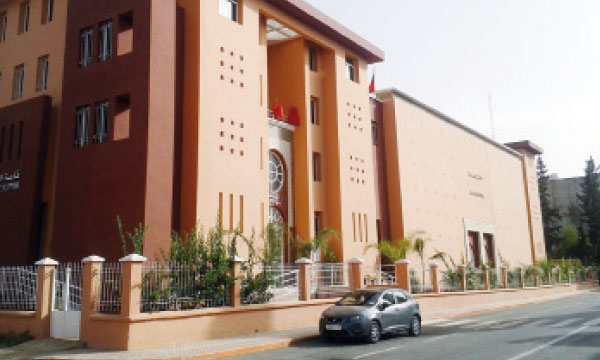
Beni Mellal House of Culture
Opened in 2014, Beni Mellal House of Culture is a 1,300-square-metre public venue with a 300-seat auditorium, exhibition gallery, library, children’s and multimedia areas, hosting theatre, film, music, training and civic events.
Why visit
About Beni Mellal House of Culture
A permanent cultural venue for Beni Mellal
Beni Mellal House of Culture is one of the region’s main public facilities for the performing arts, reading and cultural participation. It opened on 19 May 2014 after years in which theatre productions, public meetings and artistic programmes had to move between venues that were not always designed for cultural use.
The project created a permanent home for artists, associations, schools and audiences. It was funded by the ministry responsible for culture, the former Tadla-Azilal Regional Council and the municipality of Beni Mellal. Official administration also uses the name Beni Mellal Cultural Centre; both names refer to the same building on Avenue Abdelkrim El Khattabi.
A 1,300-square-metre multidisciplinary building
The centre was built over approximately 1,300 square metres at a reported cost of 14 million dirhams. It was designed to combine artistic presentation, public reading, training and programmes for children rather than serving only as an events hall.
Its principal facilities include a 300-seat auditorium, an exhibition gallery, a public library and reading room, a children’s area, a multimedia room and spaces that can support workshops, meetings and mediation activities.
The 300-seat capacity is the figure published at the time of inauguration. It gives the city a medium-sized hall suitable for regional productions, national touring work, educational ceremonies and public gatherings.
A regional platform for theatre
Theatre has been central to the centre’s activity from the beginning. During its first months it hosted companies from Beni Mellal and other Moroccan cities, indoor and street performances, and workshops on dramatic writing, scenography and acting.
The venue has also supported company residency programmes. Such schemes allow an ensemble to work over several months on production, training and audience development rather than simply hiring the stage for one evening. The Arlequin Theatre company developed a programme involving improvisation, mask work, acrobatics, dramaturgy, text analysis, street theatre and professional discussions.
In 2025, the Orchid company organised another artistic residency for young participants, focusing on speech, reading, acting and stage direction. These projects establish the centre as a place where theatre is made and transmitted, not only presented.
Film screenings and screen education
The auditorium can host film screenings and discussions. Only weeks after opening, it received Beni Mellal’s first cinema meeting, with feature and short films, tributes and exchanges between professionals and audiences.
Later programmes have included Moroccan films, documentaries and activities for children. In July 2024, the municipality used the House of Culture as one of the screening venues for its cultural, artistic and sporting days.
The centre is not a commercial cinema with daily sessions. Screenings depend on festivals, cultural cycles, educational programmes and municipal events, so visitors should consult the current calendar.
Public library and reading
The library is a major part of the institution’s mission. The municipality describes it as an equipped public library with free access and resources for adults and children.
The reading room, youth area and multimedia space can support storytelling, author meetings, writing workshops, artistic initiation, educational support and digital discovery. This approach treats public reading as a neighbourhood cultural service rather than as the passive storage of books.
Registration, borrowing rules and opening times may change and should be confirmed directly with the centre.
Children, young people and arts education
A significant share of the monthly programme has been directed towards children, teenagers, school pupils and university students. Activities have included theatre, drawing, music, dance, documentary film, public speaking and project-development workshops.
Schools also use the auditorium for end-of-year performances, competitions and regional educational gatherings. In April 2026, the House of Culture hosted the closing stage of Morocco’s sixth National Public Speaking Prize, bringing pupils together for performances in several languages, including Arabic and Amazigh.
This connection between culture and education is particularly relevant in Beni Mellal, a university city and regional capital. The centre gives young people an initial public stage even when they do not have regular access to specialist arts institutions.
Music, spiritual traditions and regional expression
Music programmes bring together local practices and wider Moroccan repertoires: Amazigh music, popular song, youth ensembles, spiritual music, madih and samaa, concerts and encounters around oral heritage.
In March 2026, the House of Culture hosted an evening of devotional song supported by the Regional Directorate of Culture. The reported public response illustrates the centre’s ability to gather diverse audiences around a living artistic tradition.
The institution does not have to reduce regional culture to folklore. It can support artists who reinterpret the heritage of Tadla, the Middle Atlas and Amazigh territories through theatre, visual art, music, cinema and contemporary creation.
Exhibitions and visual arts
The gallery can present painting, photography, craft, heritage, school work and productions created through workshops. Soon after the venue opened, an exhibition of objects connected with ancient Egyptian civilisation remained on display for more than two weeks, illustrating the possible breadth of exhibition subjects.
The gallery also offers artists and associations from the region a public presentation space in a city with relatively few permanent commercial galleries. Exhibitions can therefore connect artists, university students and audiences without specialist art backgrounds.
Associations, debate and territorial development
The House of Culture also operates as a civic gathering place. It hosts conferences, forums, project launches, ceremonies and association-led activities related to youth, education, employment and local development.
In 2025 and 2026, the venue received a regional forum on youth institutions, a programme supporting young people outside employment and training, and several major educational events.
These uses do not replace artistic programming. They express another function of a public cultural centre: providing the city with an identifiable, equipped space for exchanging ideas, building partnerships and presenting collective initiatives.
A role extending across the region
Beni Mellal sits at the centre of a territory combining medium-sized towns, rural communities, mountain areas and major agricultural landscapes. Artists and associations across the region have limited access to permanent professional stages. The House of Culture therefore acts as a bridge between local production and national cultural circuits.
It can receive touring companies, host regional selections and prepare artists for events elsewhere in Morocco. In return, it allows local audiences to encounter work that might otherwise remain concentrated in Casablanca, Rabat or Marrakech.
Planning a visit
The House of Culture is not a museum with a permanent visitor route. Access to the auditorium, gallery and workshops depends on the announced programme. Some activities are free, while others may require an invitation or a ticket issued by the organiser.
The library may follow different hours from performances and administrative services. Confirm the activity, time and access conditions before travelling.
Browse current cultural events in Beni Mellal and the city’s cultural institutions.
Practical information
Address: Avenue Abdelkrim El Khattabi, Beni Mellal 23000, Morocco
Telephone: +212 5 23 48 33 33
Type: public cultural centre
Main facilities: 300-seat auditorium, exhibition gallery, library, reading room, children’s area and multimedia room
Location
Find Beni Mellal House of Culture
Continue exploring
Explore more culture in Beni Mellal
Use Culturama to discover more events and cultural places across Morocco.