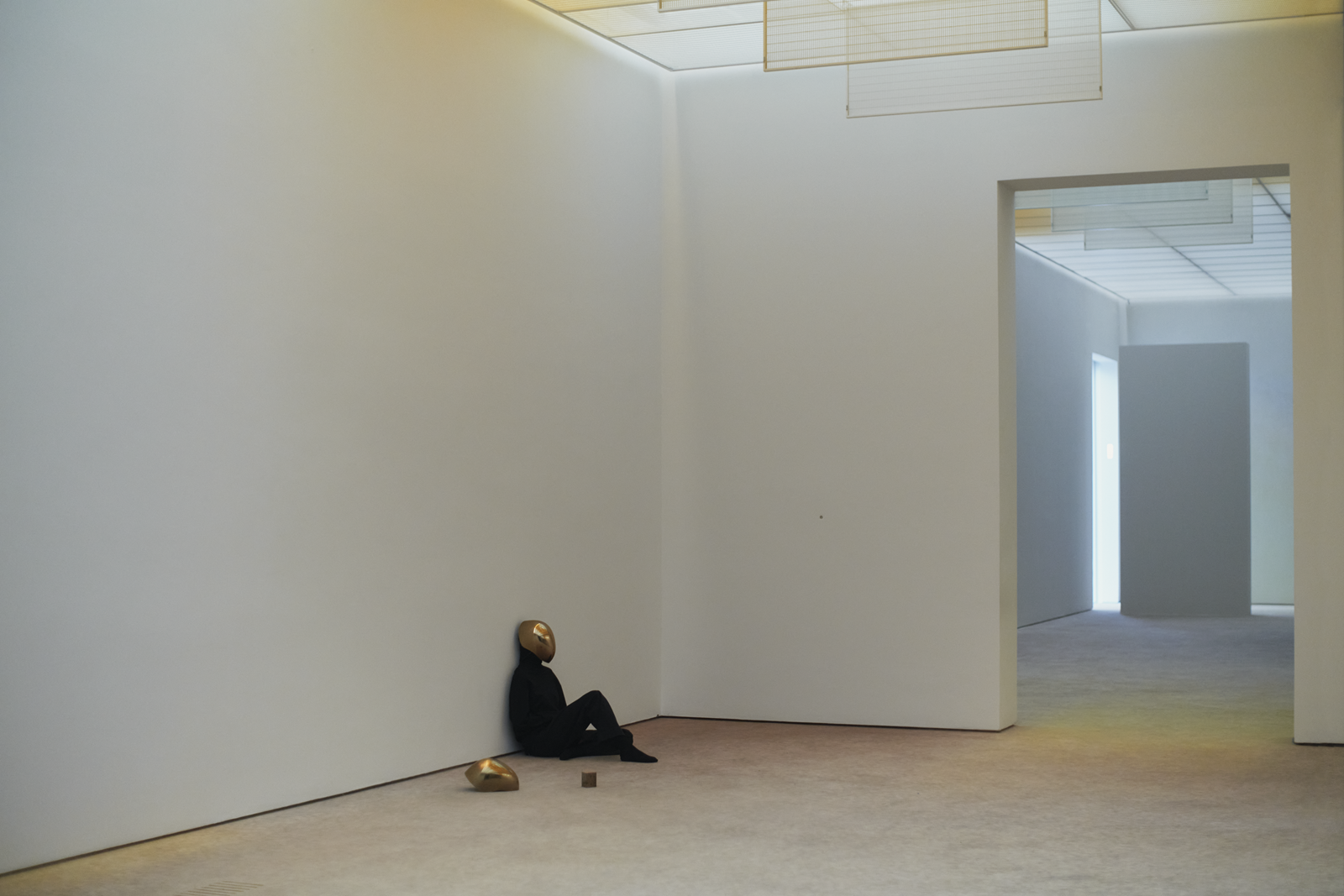
Visitors to Pierre Huyghe’s exhibition at Fondation Beyeler do not follow a conventional route. They enter an environment made of sound, images, light, movement and forms that seem to continue existing on their own.
The project pushes further a major development in contemporary art: the exhibition is no longer simply a space where works are brought together. It becomes a work in itself, with its own climate, rhythms and transformations.
Moving beyond the object
The traditional museum organises an encounter between the public and clearly identified objects. A painting is hung, a sculpture placed on a plinth and a label provides information.
Pierre Huyghe works differently. He creates systems in which several elements interact. Sound changes the perception of an image, light transforms a space and an organic form introduces unpredictability.
The public can no longer understand everything at a glance. Visitors must accept a partial and sometimes uncomfortable experience.
An exhibition specific to its site
The project at Fondation Beyeler was conceived for the museum’s architecture. It includes films such as Liminals and presences that alter the atmosphere of the galleries.
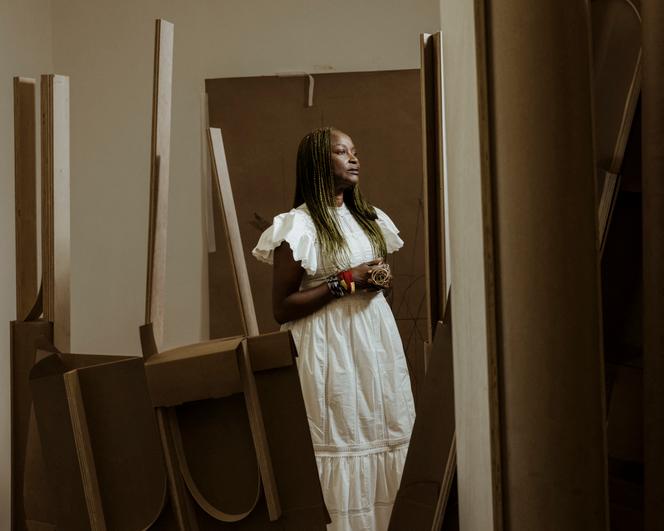
This relation to place connects Huyghe with other contextual practices, even when their methods differ. In Lydia Ourahmane’s Venice project, the city, its objects and its uses directly participate in the production of the work.
In both cases, moving the exhibition elsewhere without transforming it would remove part of its meaning.
Between organism and technology
Huyghe’s vocabulary draws on biology, artificial intelligence, cinema and science fiction. His environments sometimes seem to possess behaviour of their own.
This raises a question: who is really the author when a work evolves through a system, living organisms or data? The artist designs the initial conditions, but does not necessarily control every event.
The tension echoes debates around generative AI. In our analysis of protecting human work in the creative industries, responsibility and the value of human intervention already appeared as central questions.
For Huyghe, technology is not used merely to create spectacle. It shifts the concept of authorship and asks us to see the work as a relationship between several agents.
The visitor is no longer only a spectator
Immersive exhibitions are sometimes criticised for prioritising spectacular images made for social media. Immersion then becomes scenery rather than an artistic experience.
Huyghe’s work resists that logic. It does not necessarily seek to reassure or provide an immediately shareable viewpoint. Visitors may feel disoriented, watched or unable to determine what is living, simulated or recorded.
That uncertainty is part of the work. It requires another form of attention: slower and less focused on consuming images.
New responsibilities for museums
Presenting organisms, complex technologies or evolving installations changes museum work. Conservation, safety, maintenance, interpretation and documentation all need to be reconsidered.
How do you preserve a work that changes? What should be kept: its objects, code, conditions or behaviour? How can the project be explained without removing its mystery?
These questions no longer concern only major European institutions. They will also shape the development of digital and immersive art in Morocco and the wider region.
The exhibition as environment
Pierre Huyghe proposes thinking of an exhibition as a temporary environment. The public does not encounter a closed explanation, but a situation in which several realities coexist.
The form can be demanding, but it recalls an essential function of art: creating spaces where familiar categories — living and artificial, author and system, reality and fiction — cease to be entirely stable.