Museum · Casablanca
Abderrahman Slaoui Foundation Museum
A private museum opened in a 1940s Casablanca residence in 2012, presenting Abderrahman Slaoui’s collections of Moroccan jewellery, vintage posters, painting, ceramics, kohl bottles, snuff boxes and cabinets of curiosity.

Why visit
About Abderrahman Slaoui Foundation Museum
A museum shaped by one collector's eye
Located at 12 Rue du Parc in central Casablanca, the Abderrahman Slaoui Foundation Museum is one of the city's few private museums permanently open to the public. It opened on 15 May 2012, eleven years after Abderrahman Slaoui's death, to make part of the collection he assembled over more than half a century accessible to wider audiences.
Rather than behaving like a large encyclopaedic museum, the institution feels like a collector's house. Works, objects and documents are arranged in thematic chapters that gradually reveal Slaoui's travels, research, tastes and personal memories. This intimate scale is central to the visit.
Abderrahman Slaoui: collector, patron and heritage advocate
Born in Fez in 1919 and deceased in 2001, Abderrahman Slaoui was an industrialist, businessman, traveller, patron and collector. Memories of his family home, its Arab-Andalusian decoration and the jewellery worn during religious and family celebrations strongly influenced his later collecting.
His marriage into the family of master jeweller Haj Abdessalam Benchekroun deepened his knowledge of Moroccan goldsmithing. Over time he assembled major groups of jewellery, vintage posters, paintings, decorative arts and unusual objects. He also helped draw attention to artists including Mohammed Ben Ali R'bati, a pioneer of Moroccan figurative painting.
Before the museum opened, parts of the collection had already been published and shown in travelling exhibitions. The reception of the orientalist posters and of jewellery included in “Morocco, Treasures of the Kingdom” confirmed the collection's heritage value and strengthened the idea of a permanent museum in Casablanca.
A 1940s residence transformed into a house museum
The museum occupies a residence built in the 1940s within a central district shaped by Casablanca's twentieth-century architecture. Around 600 square metres are distributed across three levels.
The conversion combines the atmosphere of a Moroccan home with contemporary museum display. Philippe Délis's scenography does not impose one strict chronology. Instead, colour-coded sequences guide visitors from one collecting universe to another. Small objects such as jewellery, bottles, boxes and snuff containers receive the close attention they require, while decorative arts, painting and graphic design remain in dialogue.
Orientalist posters, tourism and visual communication
The vintage poster collection is one of the museum's defining strengths. It documents how Morocco, North Africa and the broader idea of “the Orient” were represented through advertising, transport, tourism and consumer culture from the late nineteenth century into the twentieth.
These posters are both graphic works and historical sources. Illustration, typography, printing techniques, branding and tourism narratives reveal changing ideas of modernity and travel. They also make it possible to question colonial imagery, stereotypes and the commercial production of exoticism.
For students and professionals in design, branding, advertising and communication, the collection functions as a visual-culture laboratory: it shows how destinations, products and transport companies constructed identity long before digital marketing.
Moroccan jewellery and metalwork
Slaoui's jewellery collection reflects the diversity of Moroccan craftsmanship. Diadems, necklaces, bracelets, fibulae, belts and ceremonial ornaments introduce techniques involving gold, silver, enamel, stone setting and filigree.
The objects also carry social histories. They relate to marriage, family celebrations, inheritance, status, regional identity and symbolic protection. The museum therefore connects goldsmithing to the bodies, rituals and communities for which the pieces were made.
Painting, Majorelle and Mohammed Ben Ali R'bati
The galleries include work by Moroccan and international artists connected to the country. Mohammed Ben Ali R'bati occupies an important place through animated views of Tangier, architecture, festivals and everyday urban life.
Material connected with the Majorelle family adds another layer to the history of artists, decorators and travellers moving between Morocco and Europe. The collection lets visitors compare several ways of representing the country: local observation, travel imagery, ethnographic description, orientalist decoration and modern pictorial research.
Fez ceramics, kohl bottles, snuff boxes and cabinets of curiosity
Other permanent chapters give the museum its unusual range. Fez ceramics connect the collection to Slaoui's birthplace and to Morocco's history of fired arts. Kohl bottles and snuff boxes introduce objects associated with grooming, appearance and daily habits.
Illuminated manuscripts, Bohemian crystal boxes, travel finds and other decorative pieces create true cabinets of curiosity. The museum is therefore not only an art collection: it is a world in which craft, advertising, intimacy and material history continually intersect.
Temporary exhibitions and contemporary creation
The Foundation also produces temporary exhibitions devoted to photography, graphic design, cinema, Moroccan and international artists and contemporary readings of heritage. These projects have addressed urban memory, representation, archives, film history, identity and the transformation of cities.
Talks, screenings, conferences and public encounters extend the exhibitions. The institution remains a place of conversation between historical collections and current artistic practice rather than a static memorial to a collector.
Guided visits, schools and young audiences
Guided visits can be booked for adults, families and groups. School visits are led by mediators using language suited to pupils' ages and introducing the history, symbolism and context of the objects. Educational and artistic workshops are also offered periodically to younger visitors.
Museum café and shop
On the top floor, the museum café offers a quiet pause with books available to read. It can also host selected meetings, press events and private functions.
The shop carries books written by Abderrahman Slaoui, exhibition catalogues, publications on Moroccan art, vintage-poster reproductions and postcards, extending the museum's editorial work beyond the galleries.
Planning a visit
The museum stands close to Arab League Park, the former Sacred Heart Cathedral and Mohammed V Square. Its compact, carefully curated format rewards close looking without the scale of a large museum.
Address: 12 Rue du Parc, Casablanca 20070, Morocco
Phone: +212 5 22 20 62 17
Email: fas.musee@gmail.com
Published opening hours: Tuesday to Saturday, 10:00–18:00
Usually closed: Monday and Sunday
Admission prices, temporary exhibitions and activities may change. Check the official website or contact the museum before a group, guided or educational visit.
Continue with the Villa des Arts, the French Institute of Casablanca, Casablanca's cultural places and the current city agenda.
Keep exploring
Cultural places near Abderrahman Slaoui Foundation Museum
Distances below are approximate straight-line distances based on verified coordinates.
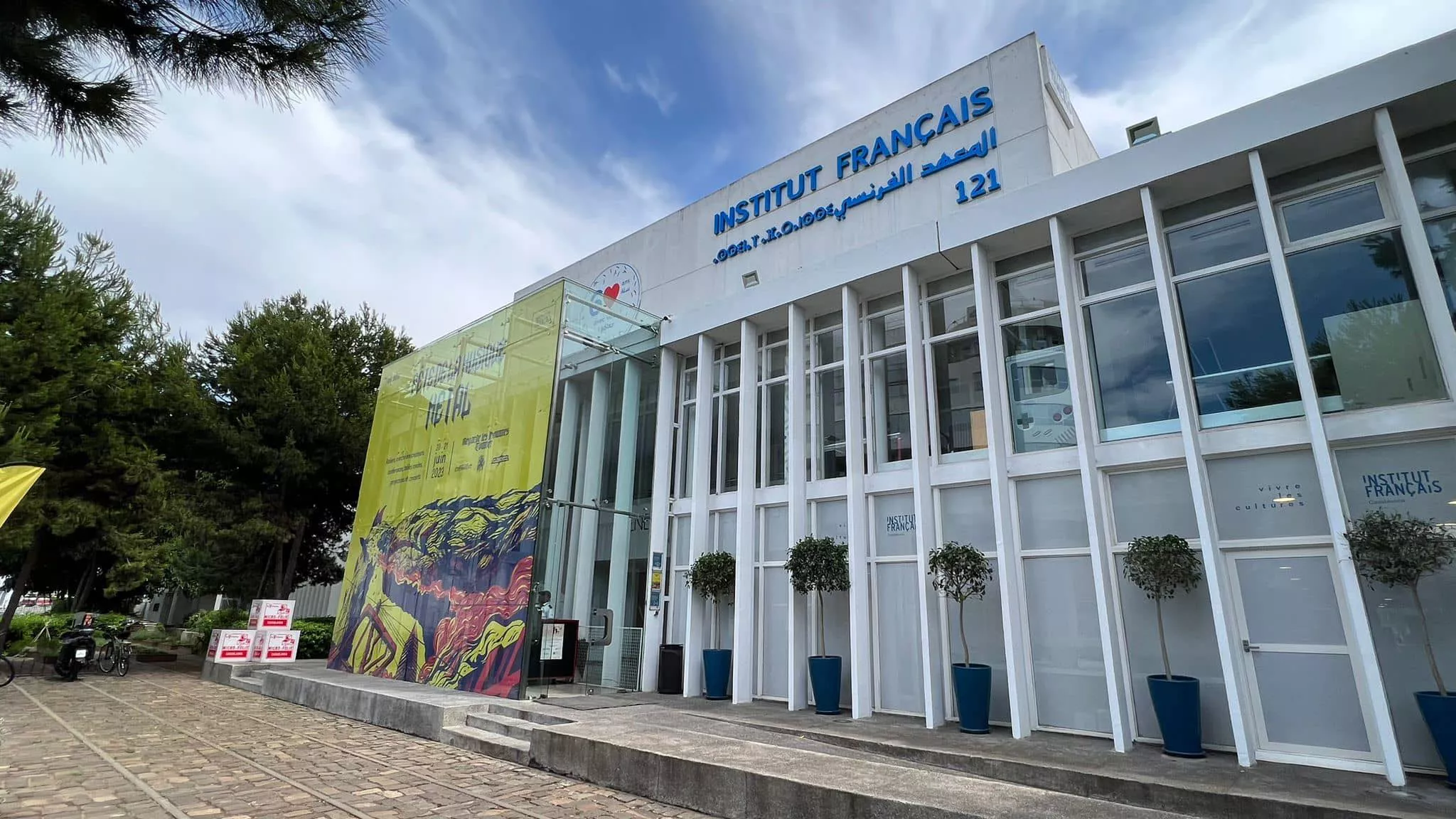
French Institute of Casablanca
A central Casablanca cultural campus combining Theatre 121, Gallery 121, media libraries, French courses,…
Approx. 1.0 km away
Villa des Arts
A multidisciplinary art space run by the ONA Foundation, presenting exhibitions, artist residencies,…
Approx. 1.1 km away
Instituto Cervantes Morocco – Casablanca
Spain’s cultural network in Morocco, with Spanish courses, exams, libraries, film, literature, exhibitions…
Approx. 1.4 km awayMegarama Casablanca
A large multiplex on Casablanca’s seafront, screening international blockbusters and Moroccan films.
Approx. 3.7 km awayLocation
Find Abderrahman Slaoui Foundation Museum
Continue exploring
Build a cultural day in Casablanca
Connect this venue with current events, heritage, neighbourhoods and other cultural places in Culturama’s Casablanca guide.